
While Paytm (One97 Communications) is not completely past regulatory hurdles, its share price has gained in the last month or two. The Paytm handle migration is complete along with FDI clearance necessary for the Payment Aggregator (PA) license. UPI consumer data indicates stable market share, and expansion in partner networks in financial distribution. All this implies Paytm could be set to meet guidance of turning Adjusted Ebitda breakeven by Q4FY25 (ex of UPI-incentives).
The Reserve Bank of India (RBI) has recognised the Fintech Association for Consumer Empowerment (FACE) as a self-regulatory organisation (SRO) in the fintech sector, the central bank announced on Wednesday. The banking regulator received three applications for fintech SRO. Of the remaining two applications, one has been returned by the RBI with a provision for resubmission after meeting specific requirements, while the third application is still under examination, said Governor Shaktikanta Das at the Global Fintech Fest in Mumbai.

Prayagraj is transforming into a massive temporary city to host the Maha Kumbh, the world's largest religious gathering, expected to draw over 40 crore pilgrims. The preparations include extensive infrastructure development, including 160,000 tents, 150,000 toilets, and a 1,250-km pipeline network. The event, starting on January 13, will culminate on February 26, bringing together millions of devotees for the holy dip at the confluence of the Ganga, Yamuna, and Saraswati rivers.

The recent run on the US-based Silicon Valley Bank (SVB) and the subsequent seizure of its assets by the regulators may have sparked a global wave of risk aversion, particularly for start-ups. However, the Indian banking sector is unlikely to be a victim of any contagion effects, said analysts. he bank, which played a big role in financing start-ups and technology players, faced stress after incurring huge losses on its holdings of US bonds, following the most-aggressive monetary tightening cycle by the Federal Reserve in around four decades.

'Our AI strategy -- AI in Everything, Everything for AI, and AI for Everyone -- is now in action.'

'Additionally, the significant employment multiplier will boost direct and indirect jobs of up to 1.1 million.'
Replying to a question about women empowerment, Sitharaman insisted that patriarchy is a concept invented by the Left.

From the 30-share blue-chip pack, Zomato surged over 7 per cent. Maruti, ITC Hotels, ITC, Mahindra & Mahindra, Asian Paints, Titan and IndusInd Bank were among the biggest gainers. Power Grid, Larsen & Toubro, NTPC, UltraTech Cement, HCL Tech, Tech Mahindra, Infosys and Adani Ports were among the laggards.

The second-quarter performance of the top five information-technology services firms gives the hint that slow growth has bottomed out on the back of discretionary spending kicking in for the sector's largest vertical - the banking and financial services. However, concern about the macro-environment continues to be a challenge. Among the top four - Tata Consultancy Services (TCS), Infosys, HCLTech, and Wipro - it is Bengaluru-based Infosys that has performed the best and that was evident in its full-year revenue guidance.

President Droupadi Murmu, in her address to the nation on Republic Day, advocated for the "One Nation One Election" initiative, emphasizing its potential to enhance governance and reduce financial burdens. She highlighted the government's efforts to eliminate remnants of colonialism, citing the replacement of British-era criminal laws with modern alternatives. Murmu also lauded India's economic progress, stressing the importance of inclusive growth and social welfare. She urged citizens to remember the sacrifices of freedom fighters and reaffirmed the significance of the Constitution in guiding India's journey towards a prosperous and equitable future.

About 99,165 electric cars were sold in India in 2024, but electric car penetration -- share of electric car sales in total sales -- was just about 2.5 per cent.

ITC, State Bank of India, HCL Technologies and IndusInd Bank were the other big laggards. NTPC, UltraTech Cement, HDFC Bank and Mahindra & Mahindra were among the gainers.

IndusInd Bank was the biggest gainer in the Sensex pack, rising 3.25 per cent, followed by Tech Mahindra, Wipro, Bharti Airtel, HCL Technologies, Axis Bank, HDFC Bank, RIL, TCS, L&T and Infosys. State Bank of India, NTPC, Maruti, Bajaj Finserv, Tata Motors and Power Grid were among the laggards, slipping up to 2.94 per cent.

One thing is for sure: It smacks of the regulator's lack of confidence in the bank's board, points out Tamal Bandyopadhyay.

From the 30 Sensex firms, Tata Consultancy Services and HCL Technologies dropped over 3 per cent each. Infosys, Tech Mahindra, Sun Pharma and Tata Motors were the other major laggards. Bajaj Finance, Bajaj Finserv, Nestle, HDFC Bank, ICICI Bank and State Bank of India were among the biggest gainers.

The Reserve Bank of India (RBI) on Wednesday issued a draft framework for alternative authentication mechanism for digital payments, wherein it has mandated that all digital payment transactions would have to be authenticated with an additional factor of authentication (AFA), except small value contactless card payments for up to Rs 5,000 at point of sale terminals, e-mandates for recurring transactions, and small value digital payments through offline mode, among others. Additionally, it has said that all digital payment transactions, other than card present transactions, have to ensure that one of the factors of authentication is dynamically created, i.e., the factor is generated after initiation of payment; is specific to the transaction; and cannot be reused.

Front-running is a fraudulent practice where traders exploit advance knowledge of large client orders for personal profit.

In 2024, the National Payments Corporation of India (NPCI) approved 20 third-party Unified Payments Interface (UPI) applications, a record since UPI's launch in 2016. This surge reflects growing interest from financial technology (fintech) companies, driven by the integration of credit products like UPI-linked credit cards and pre-approved credit lines.

In his complaint, the victim alleged that on September 12, he received a video call from a person claiming to be from the Telecom Regulatory Authority of India, who told him that his mobile number will be blocked.

From the Sensex pack, IndusInd Bank, NTPC, Asian Paints, Hindustan Unilever, JSW Steel, Tech Mahindra, Bajaj Finance, Infosys, Wipro, ICICI Bank, Bajaj Finserv, HDFC Bank and Tata Motors were among the major laggards. HCL Technologies, Power Grid, Titan, Reliance Industries, UltraTech Cement, Tata Steel, State Bank of India and Mahindra & Mahindra were the gainers.

The Tata Group is one of the very few Indian MNCs which has carved out a niche in China's highly competitive market, notes Rup Narayan Das.

'It is not that employee work is not happening if you don't see it.'

For the first time, the Prayagraj Railway Division will install face recognition cameras alongside CCTV at railway stations, specifically for the Mahakumbh, the Uttar Pradesh government said in a statement.
Inaugurating the Grameen Bharat Mahotsav, the Prime Minister exuded confidence that villages will play a key role in pushing forward the dream of Viksit Bharat by 2047.
From the Sensex pack, Tata Motors, Sun Pharmaceutical, Bharti Airtel, Bajaj Finserv, ICICI Bank, Mahindra & Mahindra and JSW Steel were the gainers. Tech Mahindra, HCL Technologies, Asian Paints, Titan, Infosys, State Bank of India, Tata Consultancy Services and HDFC Bank were the laggards.
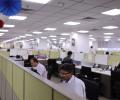
India's office market was very active in 2024 with gross leasing of workspace witnessing a 19 per cent increase to a record 885.2 lakh square feet across eight major cities, according to Cushman & Wakefield. The gross leasing or absorption of office space stood at 745.6 lakh square feet in the preceding year, data from real estate consultant Cushman & Wakefield (C&W) showed.
Among the Sensex firms, Power Grid, UltraTech Cement, Titan, Reliance Industries, Bajaj Finance, Mahindra & Mahindra, ICICI Bank, Tata Consultancy Services, Tech Mahindra, ITC and HDFC Bank were the major laggards. HCL Technologies, IndusInd Bank, Wipro, Nestle, Maruti, Larsen & Toubro and Asian Paints were among the gainers.

Luxury carmaker Mercedes-Benz India plans to roll out 8 new models, including battery electric vehicles, this year as it looks to sustain sales momentum having posted record sales in 2024. The company sold 19,565 units last year, registering a growth of 12 per cent as compared to 17,408 units in 2023.

The Indian economy is projected to grow at 6.3 per cent in current financial year aided by investment and domestic demand. According to a World Bank report released on Tuesday, India continues to show resilience against the backdrop of a challenging global environment. In India, which accounts for the bulk of South Asia region, growth is expected to remain robust at 6.3 per cent in 2023-24, India Development Update of the World Bank said.
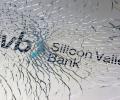
The UK government announced on Monday that it has facilitated London-based banking major HSBC to buy the embattled UK arm of Silicon Valley Bank for 1 pound, securing the deposits of more than 3,000 customers worth around 6.7 billion pounds. Santa Clara, California-based Silicon Valley Bank - which specialised in lending to technology companies - was shut down by US regulators on Friday in what was the largest failure of a US bank since 2008. According to experts, although the UK arm of SVB was small with only around 3,000 business customers, its collapse would have presented a risk for the tech sector which is seen as crucial to Britain's economic growth.

'You will see him frequently asking customers -- especially retail -- about service experience, pain points, areas of improvement and suggestions.'

In the months immediately following the 2024 tragedy, reporting on the landslide per se had been a straightforward affair. On one side was death and destruction. On the other side, survivors and the business of survival. It was black and white. What direction to take was clear. Rehabilitation in comparison, felt like a complex situation. One that is fraught with shades of grey. As grey as human life, explains Shyam G Menon.

As regards mid-caps and small-caps, analysts suggest investors buy only those stocks of those companies where there is earnings visibility for at least a few quarters and where the valuations have become reasonable.

Among the 30 Sensex firms, HCL Technologies, NTPC, Bajaj Finserv, Tech Mahindra, JSW Steel, Titan, Mahindra & Mahindra, Tata Steel, Larsen & Toubro and Tata Consultancy Services were the biggest gainers. Kotak Mahindra Bank, IndusInd Bank, Maruti and Hindustan Unilever were among the laggards.

Benchmark stock indices Sensex and Nifty closed with losses in a choppy trade on Thursday as investors preferred a cautious approach ahead of inflation and industrial production data to be released later in the day. Unabated foreign fund outflows also hit the investor sentiment. The 30-share BSE Sensex declined by 147.47 points or 0.25 per cent to settle at 59,958.03.
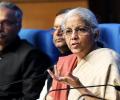
The eighth Budget of Finance Minister Nirmala Sitharaman continued to focus on 'GYAN' (Garib, Youth, Annadata, Nari) to maintain a consistent and coherent strategy initiated over the years in pursuing the government's vision for Viksit Bharat. The approach, characterised by incremental yet impactful steps, aims to create a compounding effect over time.

'Unfortunately, most of our students use AI to replace knowledge when they should be using the AI tools to enhance their knowledge.' 'I am sorry to say, even those students who have opted to study AI have no idea what AI is.'

Among the Sensex pack, Kotak Mahindra Bank, Bharti Airtel, IndusInd Bank, Tata Motors, ICICI Bank, Bajaj Finance, State Bank of India and Titan were the biggest laggards. Larsen & Toubro, Infosys, HDFC Bank, Tata Consultancy Services, HCL Technologies and Tata Steel were the biggest gainers.

According to the World Bank, economic growth in middle-income countries, including India, is not accelerating. 'In fact, it is slowing down as incomes increase, with the trend becoming more pronounced each decade.'

'It is the first technology in history which is not just a tool, it is an agent.' Yuval Noah Harari on the dangers on AI.
